

The Content System Behind Consistent Growth

The Content System Behind Consistent Growth

What if the
problem isn’t your content quality…but the absence of a system behind it?

Most
companies don’t struggle with ideas. They struggle with consistency, clarity, and direction.

One week
there’s a strong LinkedIn post. Next week—nothing.

Then a random blog article. Then silence again.

This is not
a content problem. This is a system problem.

And the
uncomfortable truth is this:

Content
only works when it’s managed as a system—not as isolated activities.

This is
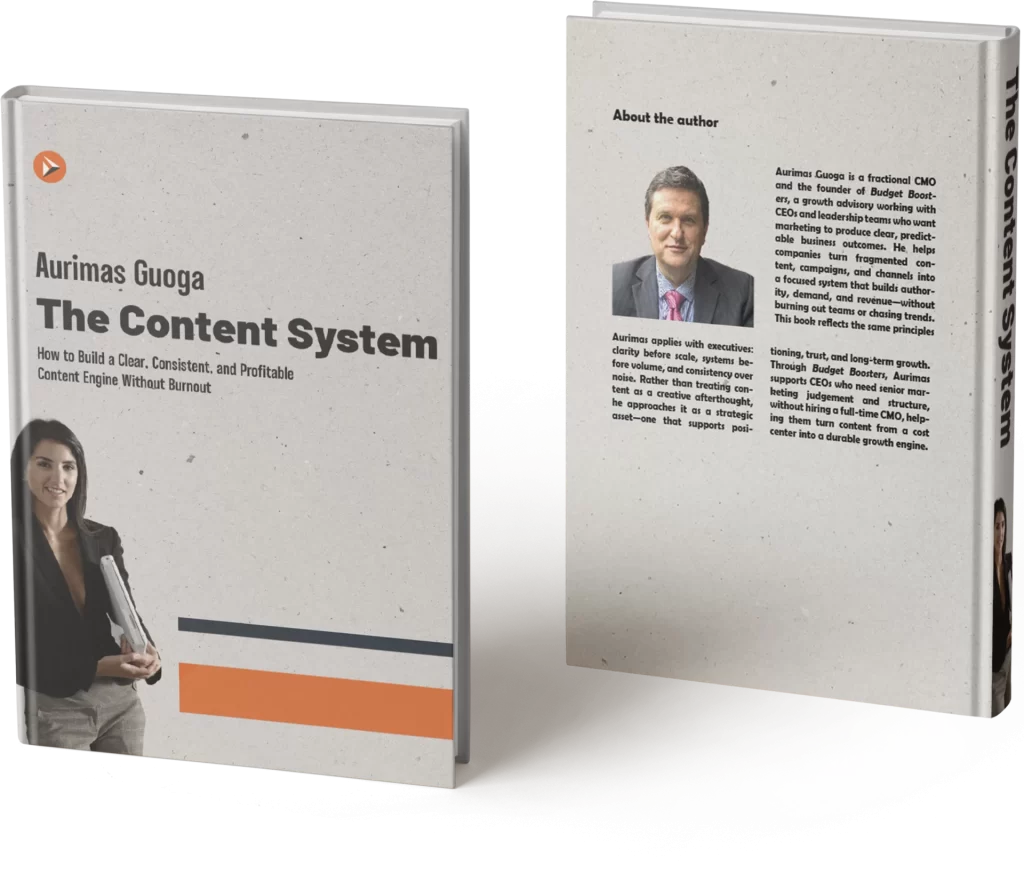
exactly the shift described in From Zero to Content Hero—a practical
framework that turns scattered effort into a predictable engine of growth .

Let’s break
down the most important ideas—and translate them into a model CEOs and
marketing leaders can actually use.

Key Takeaways

  • Content Systems Turn Random Activity Into Predictable Growth.

  • Precision in Audience Targeting Beats Broad
    Visibility Every Time

  • A Clear Magnetic Message Drives Results More
    Than Content Volume

  • A Structured Content Engine Eliminates
    Inconsistency and Burnout

  • Consistency
    and Cadence Matter More Than Occasional High Performance

  • Content
    Strategy Connects Content Effort Directly to Business Outcomes

Table of Contents

  • Content
    Starts With Precision — Not Volume

  • The
    Magnetic Message (Why Most Content Fails)

  • The Content
    Engine: Turning Ideas Into Output

  • Distribution
    Is Strategy — Not an Afterthought

  • Consistency
    Is the Real Growth Lever

  • Engagement: From Broadcasting to Conversation

  • Repurposing:
    How to Multiply Content Without Extra Work

  • Monetization: Turning Content Into Revenue

The Content System Behind Consistent Growth

(And Why
Most Companies Still Get It Wrong)

What if the
problem isn’t your content quality… but the absence of a system behind it?

Most
companies don’t struggle with ideas. They struggle with consistency, clarity, and direction.

One week
there’s a strong LinkedIn post. Next week—nothing.

Then a random blog article. Then silence again.

This is not
a content problem. This is a system problem.

And the
uncomfortable truth is this:

Content
only works when it’s managed as a system—not as isolated activities.

This is
exactly the shift described in From Zero to Content Hero—a practical
framework that turns scattered effort into a predictable engine of growth .

Let’s break
down the most important ideas—and translate them into a model CEOs and
marketing leaders can actually use.

1.
Content Starts With Precision — Not Volume

Most
companies begin content creation backwards. They ask:

  • "What
    should we post?"

  • "Which platform should we use?"

  • "Should
    we try video?"

But the
real question is much simpler: Who
exactly are we speaking to?

The book
makes a critical distinction:

  • Total audience (TAA) = everyone who could be
    interested

  • Serviceable audience (SOA) = people you can actually
    help

And here’s
the key insight: Growth
doesn’t come from reaching more people. It comes from resonating deeply with the right people.

Why
"niching down" actually increases growth

This feels
counterintuitive for most CEOs. Smaller
audience = smaller results… right? Wrong.

A precise audience:

  • engages
    more

  • converts
    faster

  • shares
    content more actively

  • creates
    stronger word-of-mouth

In practice:

A generic message:

"We do marketing."

A precise message:

"We help
B2B companies turn fragmented marketing into a predictable revenue system."

Only one of
these creates demand.

The real
shift

Content
becomes powerful when it stops being:

  • general

  • informative

  • broad

…and becomes:

  • specific

  • relevant

  • outcome-driven

2. The
Magnetic Message (Most Companies Skip This Step)

Once the
audience is clear, the next bottleneck appears: Messaging.

Most
companies describe what they do. Few explain:

  • who
    it’s for

  • what
    outcome it creates

  • why
    it matters

The book
simplifies this into one of the most useful frameworks:

"I help
X achieve Y so they can Z."

Why this
matters more than content itself

Because
content without a clear message creates:

  • attention
    without direction

  • traffic
    without conversion

  • visibility
    without growth

A strong
message does three things:

  1. Filters
    the right audience

  2. Aligns
    all content

  3. Accelerates
    trust

Weak vs
strong messaging (real-world difference)

Weak: "We create
content."

Strong: "We help
companies turn content into a predictable growth system."

One
explains activity. The other promises outcome.

The
deeper layer: EVP (Expertise + Values + Personality)

The book
highlights a powerful idea:

The
strongest content sits at the intersection of:

  • what
    you know

  • what
    you believe

  • how
    you express it

This is why
copying competitors never works.

Because:

  • expertise
    can be copied

  • tactics
    can be copied

  • perspective
    cannot

3. The
Content Engine (Where Most Teams Break)

This is
where the real problem begins.

Even with:

  • clear
    audience

  • strong
    message

Most
companies fail at execution.

Why? Because
they rely on:

  • motivation

  • random
    ideas

  • ad
    hoc production

Instead of a system.

The
Content Engine has 3 parts:

1.
Capture (Idea System)

Great
content doesn’t start when you sit down to write.

It starts when:

  • you
    collect insights

  • observe
    audience problems

  • capture
    ideas daily

Without this:

  • you constantly "start from
    zero"

  • creativity
    feels hard

  • consistency
    collapses

2. Plan
(Content Calendar)

The book
makes this clear:

Random
posting = random results.

A
structured calendar:

  • reduces
    decision fatigue

  • ensures balance (education,
    authority, conversion)

  • aligns
    content with business goals

3.
Produce (Workflow)

This is
where most teams overcomplicate things.

The key
insight:

Minimum
viable production beats perfect production.

What matters:

  • clarity

  • relevance

  • consistency

Not:

  • cinematic
    quality

  • perfect
    editing

  • expensive
    tools

The real
bottleneck i
s not
creativity. It’s lack of process.

4.
Distribution Is Strategy — Not an Afterthought

Most
companies treat platforms like checklists:

  • "We should be on LinkedIn"

  • "Maybe
    try TikTok"

  • "Let’s
    also post blogs"

This leads to:

  • diluted
    effort

  • inconsistent
    output

  • weak
    results

The
correct approach

The book
introduces a much smarter model:

Choose:

  • 1
    primary platform
    (depth)

  • 1
    secondary platform
    (discovery)

Why this
works

Because
each platform has a different role:

Role Function
Primary Trust + authority
Secondary Reach + discovery

Trying to
do everything everywhere leads to:

Activity without impact.

**The
principle: **Depth beats
presence.

5.
Consistency Is the Real Growth Lever

This is one
of the strongest insights in the book:

Consistency outperforms virality.

**What
consistency actually does. **It:

  • trains
    the algorithm

  • builds
    audience habit

  • increases
    trust

  • compounds
    results over time

Why most
companies fail here

Because
they rely on:

  • inspiration

  • available
    time

  • internal
    priorities

Instead of systems.

The
solution: structured cadence

Not: "post
more"

But: "post
predictably"

Even: 1
post per week consistently will outperform 5
posts one week, silence
the next

The
multiplier: batching

The book
highlights a simple but powerful method:

Instead of creating one piece at a time

You create multiple pieces in one
session

Result:

  • higher
    efficiency

  • consistent
    quality

  • reduced
    mental load

The
second multiplier: templates

Templates
reduce:

  • thinking
    time

  • decision
    fatigue

  • production
    effort

And increase:

  • speed

  • consistency

  • scalability

6.
Content Becomes Powerful Only When It Engages

Publishing
is not the goal. Engagement is.

The
engagement loop

The book
defines a simple system:

  1. Ask

  2. Listen

  3. Respond

  4. Improve

**Why this matters? **Because:

  • engagement
    drives algorithms

  • engagement
    builds relationships

  • engagement
    creates insights

Without engagement content
is just noise

**The
shift: **From broadcasting

To conversation

7.
Repurposing Turns Content Into a System

Most
companies underutilize their best content.

They:

  • create
    once

  • publish
    once

  • move
    on

The
smarter approach

One piece
of content = multiple assets

Example:

  • Blog
    → LinkedIn posts

  • Webinar
    → short clips

  • Insight
    → newsletter

Why this matters

Because:

  • effort
    stays the same

  • output
    multiplies

  • reach
    increases

The
principle

Don’t
create more. Extract more.

8.
Monetization Follows Relevance

This is
where everything connects.

The book
makes a simple but powerful point:

Revenue follows relevance.

Why most
content doesn’t convert

Because:

  • it
    attracts the wrong audience

  • it
    lacks clear positioning

  • it
    doesn’t solve specific problems

The
correct model

Content
should:

  1. Identify
    a problem

  2. Build
    trust

  3. Demonstrate
    expertise

  4. Lead
    to a solution

The
structure of effective offers

The book
outlines a simple framework:

  • Problem

  • Promise

  • Proof

  • Price

The real
insight

People
don’t buy content.

They buy:

  • clarity

  • outcomes

  • certainty

9. The
System Behind Everything

At the end,
the book ties everything into a single framework:

The 7 pillars:

  1. Audience
    (Who you serve)

  2. Message
    (What you promise)

  3. Engine
    (How you create)

  4. Platforms
    (Where you publish)

  5. Consistency (When you show up)

  6. Engagement
    (How you connect)

  7. Monetization
    (What you offer)

Why this
matters

Because
most companies:

  • do
    some of these

  • ignore
    others

And that’s
why results are inconsistent.

The Real
Takeaway

Content is
not a marketing activity.

It’s a growth
system
.

When
managed correctly, it:

  • builds
    demand

  • strengthens
    positioning

  • generates
    inbound leads

  • supports
    revenue

When managed incorrectly, it:

  • consumes
    time

  • creates
    noise

  • delivers
    no ROI

Final
Thought

Most
companies don’t need more content.

They need:

  • structure

  • clarity

  • consistency

Because the difference between:

"We post content" and "We grow through content"

is not effort. It’s system.

One practical way to accelerate this system without adding headcount is to leverage ai for content creation—cutting production time while maintaining the consistency and quality your audience expects.

Frequently Asked Questions

What is a B2B content system and why is it important?

A B2B content system is a structured approach to creating, managing, and distributing content tailored for business audiences. It’s important because it helps organizations streamline their content marketing efforts, ensuring consistent messaging and targeted delivery. By using a content system, companies can effectively engage their audience, improve brand visibility, and drive conversions.

How can a content system improve my marketing strategy?

A content system enhances your marketing strategy by providing a clear framework for content creation and distribution. This leads to more efficient processes, ensuring you produce high-quality content that resonates with your audience. Additionally, it allows for better tracking of content performance, enabling you to adapt strategies based on analytics and insights.

What are the key features to look for in a B2B content system?

When selecting a B2B content system, look for features like content planning tools, analytics dashboards, and integration capabilities with existing software. Collaboration features are also vital for team alignment, while scalability ensures the system can grow with your business. These features help maintain content quality and streamline workflows.

Can a content system be customized for specific market needs?

Yes, a content system can be tailored to meet specific market needs. Customization might include adjusting content templates, setting unique workflows, or integrating with industry-specific tools. This adaptability allows businesses to align their content strategy with their target audience’s preferences and behaviors, leading to more effective engagement.

How do I measure the ROI of a content system?

Measuring the ROI of a content system involves tracking key performance indicators (KPIs) such as engagement rates, conversion rates, and lead generation metrics. By analyzing these metrics against the costs of implementing and maintaining the system, you can assess its effectiveness. Tools like Google Analytics can provide valuable insights into user behavior and content performance.

Is Budget Boosters’ content system suitable for small businesses?

Yes, Budget Boosters’ content system is designed to be user-friendly and accessible for small businesses. It offers scalable solutions that can grow with your needs, making it ideal for companies just starting with content marketing. The system’s flexibility allows small businesses to implement effective strategies without overwhelming complexity or cost.

How does Budget Boosters’ content system integrate with other services?

Budget Boosters’ content system seamlessly integrates with various tools and platforms, enhancing its functionality. It can connect with CRM systems, social media platforms, and email marketing services, allowing for cohesive content distribution and management. This integration ensures that your marketing efforts are synchronized across all channels, maximizing impact.

Aurimas Guoga

Article by

Aurimas Guoga

Aurimas Guoga is a fractional CMO and founder of Budget Boosters, helping B2B companies turn fragmented marketing into a predictable growth engine. With over a decade of experience leading marketing strategy, he works with business leaders to improve ROI, build scalable systems, and drive measurable revenue growth. Aurimas is also the author of The CMO Edge, a guide for companies looking to gain a competitive advantage through senior marketing leadership.